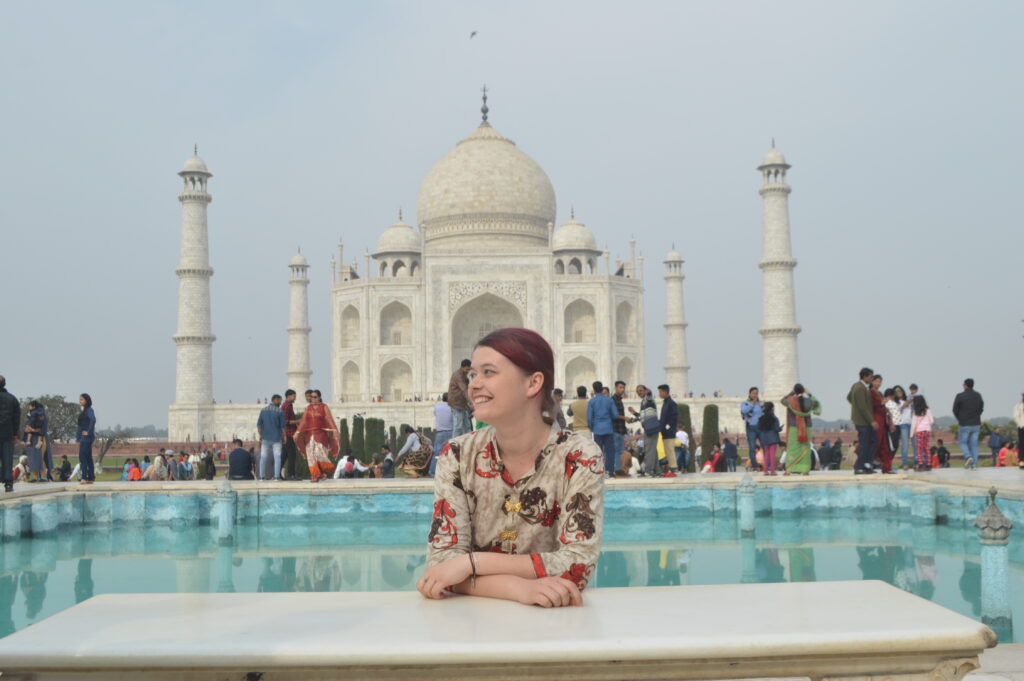
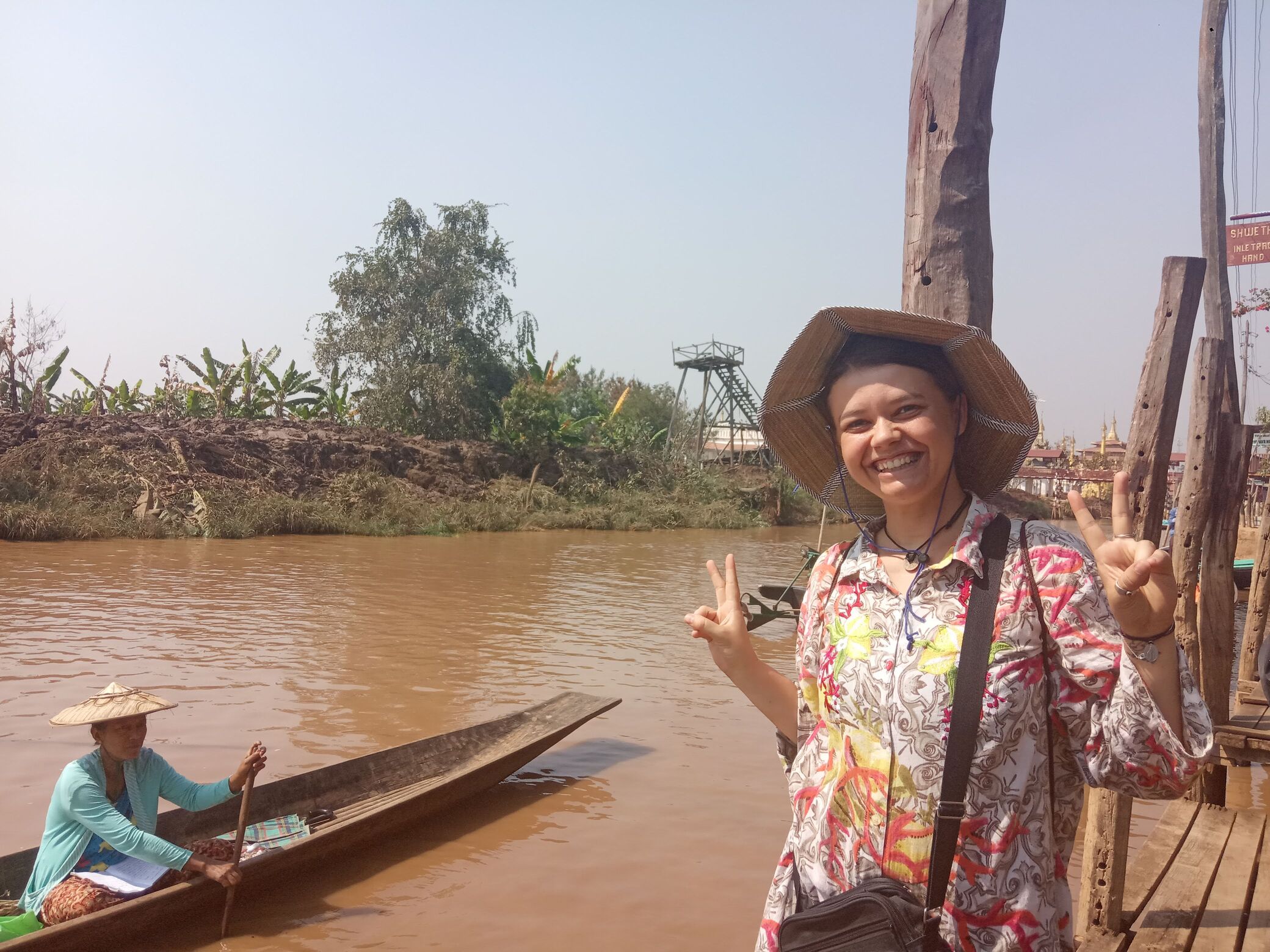
I travelled through Myanmar in March 2020, filling my journal with encounters, questions and small moments I wanted to remember. From the Kayan villages around Loikaw to the waters of Inle Lake and the paths leading towards Kalaw, it was often the people who made me pause: women working in the fields, artisans absorbed in their craft, families welcoming me into their homes. Coming from the Romanian countryside, I found something familiar in places so far away. These journal pages bring together my memories of that journey, alongside reflections on what it means to visit someone else’s home with curiosity and care.
The impact of tourism in Kayan villages
Published by Ramona Diac on March 13, 2020
Did you hear about Kayan tribes?
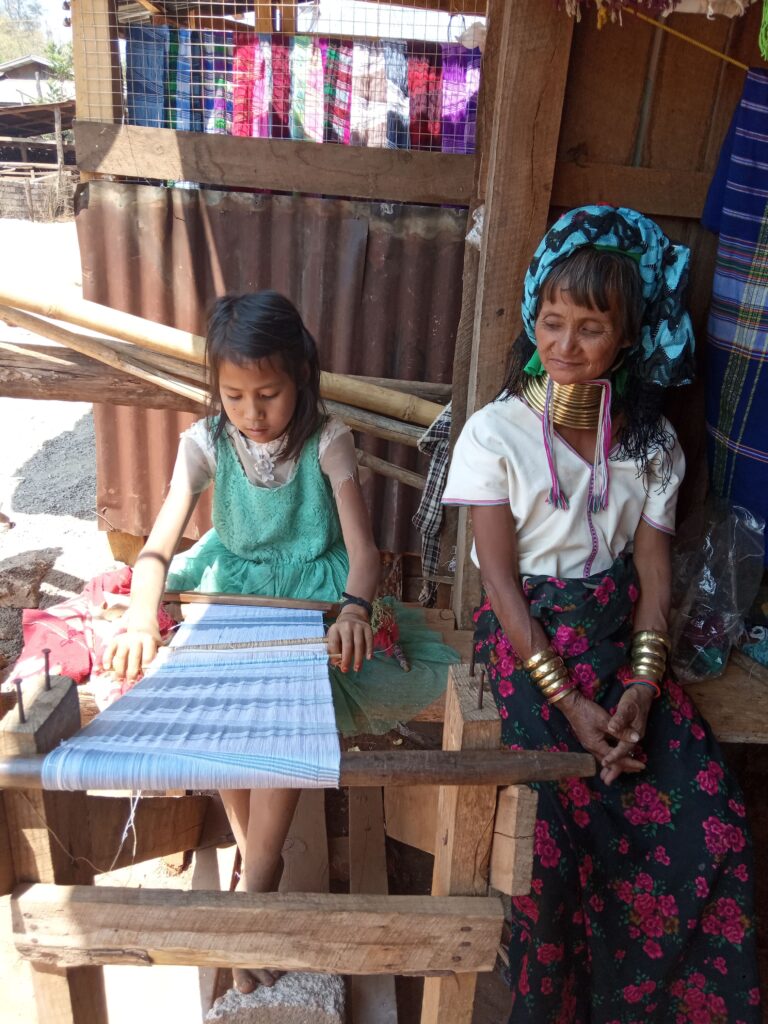
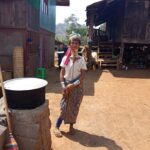
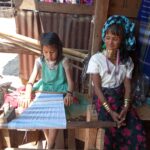
They make part of Karenni people, “the long-neck tribes”. The Kayani tribes are in big numbers in two states of Myanmar, Shan, and Kayah, (currently I’m in Kayah) but they are spread in Thailand and Vietnam too. Women of the Kayan Lahwi tribe are well known for wearing neck rings, brass coils that are placed around the neck, appearing to lengthen it. Girls first start to wear rings when they are around 5 years old. Over the years, the coil is replaced by a longer one and more turns are added.
What is the reason behind this practice?
There are many hypotheses regarding why the coils are worn. Some anthropologists considered that the rings protected women from becoming slaves. On the other hand, it has been theorized that the coils originate from the idea of creating a beauty model. If we follow the folklore’s explanations, we could consider that the coils give the women resemblance to a dragon. Other specialists suggest that the rings might be meant to protect from tiger bites because this was a real threat in the past. Nowadays, Kayan women say that their purpose for wearing the rings is cultural identity.
What is the impact of tourism in Kayan villages?
I travel in Kayah state which was known as the Karenni state in the past. In order to understand better the actual situation, let’s have a travel back in history too. The British Government recognized the independence of Karenni states in a treaty in 1875, so they weren’t incorporated in British Burma. When Myanmar obtained its independence in 1947, the Constitution proclaimed that the three Karenni states will be united in one constituent state of the Union of Burma. In 10 years, they would have had the possibility of secession from the union if their leaders wouldn’t have been satisfied with the central government. The next year, the Karenni leader was assassinated and since 1957, the Karenni Army has been fighting with the government in order to create a Karenni independent state.
Due to the conflict in the area and the lack of opportunity, many Kayan women left their homes in Kayah to Thailand where they became tourist attractions. I’ve visited villages of Pan Pet for one day and almost everywhere I’ve met women that were saying that they have little shops in Thailand too. Some of them came back to their village for good because in the last years’ tourism increased Myanmar too. Most of them came back only for a short period because of the coronavirus that affected more Thailand.
In this situation is Mu Stu, from Pan Pet, Myanmar, working in Thailand in the last five years, having little shops next to Bangkok and Chiang Mai. She came back to Myanmar last month where she opened another Kayan shop close to her village. She is wearing her neck rings for approximately 45 years, she is happy to promote her traditions but at the same time, she is looking for different opportunities to develop her small business.
Inside the new Pan Pet village, I’ve met Mu Sar, a 20 years old girl that was happy to practice her English. She decided not to wear the coils because she wants to study. When I asked what does she want to do in her future, she answered that her dream is to become a businesswoman in her village. Her purpose is to develop tourism in Kayan villages.
On the other hand, walking through these villages, I saw many old women that were doing their daily activities without waiting for the tourists to come to see them. They wear these rings every day even when they eat. They try to keep going this practice but most of the young women decided not to wear it daily just for special occasions. And I totally understand why, when I’ve tried one, I felt that I’ll be suffocated.
I hope they will find a balance between promoting their identity to the foreigners in a touristic way and maintaining their traditions and clothes for themselves. All of this in a peaceful environment because let’s not forget that this state is still in conflict with the government. Anyway, don’t be afraid to travel there, I am a solo traveler and I felt safe. Still, my advice is to travel in a responsible way, try to learn about their culture with humbleness and real curiosity. Tourism is important for these villages but the way how they create it will depend also about us, the tourists.
7 reasons to visit Loikaw – Myanmar
Published by Ramona Diac on March 15, 2020
Loikaw is a beautiful and quiet city, the capital of Kayah State in Myanmar. I’ve spent here one week and it totally worthed! I enjoyed the nature around the city, the villages and the people welcoming me and smiling to me.
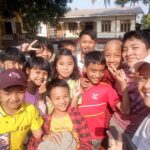
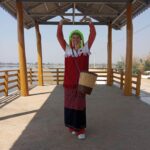
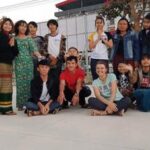
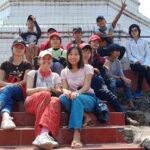
I’ve arrived in Loikaw from Yangon by a night bus, after a long trip of 13 hours (the roads are not so good in Myanmar). From the citadel and crowded life of Yangon, I ended up in a calm city where the time has another rhythm and people are more connected with each other.
- Exploring the Kayan villages. I would say that the best experience that I had in Loikaw is about visiting PanPet villages. The Kayan tribe is a sub-group of Karenni people, “the long-neck tribes”. The Kayan tribes are in big numbers in two states of Myanmar, Shan, and Kayah, (currently I’m in Kayah) but they are spread in Thailand and Vietnam too. I was lucky enough to visit these Kayan villages with a local by motorbike so I didn’t take a tour. I’ve learned about their traditions and clothes. I’ve seen their houses and I tasted their traditional food. They taught me how to say “Thank you” in Kayan language “Tareiba” but it’s only a spoken language so I’m not sure if I’ve written well.
- Enjoying the power of nature at Htee Sel Khar waterfall. I’ve spent an amazing half of the day at this waterfall, enjoying the noisy silence of nature. Htee Sel Khar waterfall is located around 45 minutes driving north of Loikaw, being well known through locals, all the people that I’ve met in the city recommended me proudly to go there.
- Watching the sunset from Taung Kwe Pagoda. The centerpiece of Loikaw is the Taung Kwe Pagoda, which comprises a number of white and gold monuments sitting on top of limestone outcrops which jut dramatically from the surrounding plains. I’ve asked the locals where I could have a beautiful view of the sunset and they sent me up to this pagoda. It was an amazing experience, the beautiful red sun is hiding slowly behind the Karen Hill, covering with a warm light the fields around the city. Watching the sunset up there is a unique experience.
- One day hiking on the highest mountain in Kayah State. If you’re an active person and you love spending time into nature like me, I recommend you to hike the Nattaung mountain, the highest one of the Karen Hills. It is located in the border area between Kayin State and Kayah State, 72 km to the west from the border with Thailand. With a height of 2,623 m and a prominence of 1,726 m, Nattaung is a good challenge to climb it in one day. I did the hike up in almost two hours and less than one and a half coming down. The view is amazing up there, you can see the villages around and the other hills.
- Walking through the corridors of Aung Tha Pyay Cave. This cave is not so famous but I found it quite impressive. It’s located around 20 minutes’ drive north of Loikaw, you could easily drive there by motorbike. The cave is close to a 1km in length and houses a dozen or so buddha statues, as well as many stalactites and stalagmites. Rather than take a tour over there, you could go by yourself, the entry is free and the place is empty. You’ll have the chance to explore it in silence, it’s quite a spiritual place because of all of the Buddha statues. At the entry you’ll see also some statues of women warriors in Myanmar, the locals were praying to them.
- Taking amazing photos at Ngwe Taung dam
Loikaw’s nearest neighbor, Demoso, holds its own when it comes to natural beauty. The dam, which helps to irrigate 4,000 acres of farmland, sits between the village of Ngwe Taung and Demoso and is something of a local magnet. Around the dam, Kayan women are selling their crafts and they offer you the chance to wear traditional Kayan clothes and take pictures with the view. - Listening to the heartbeat of Loikaw city around the Naung Yar Lake. I have to recognize that the most time spent in Loikaw was around this lake. It’s like a symbol of the city, where people are coming to take a rest or to have food and drinks. Whenever I felt that I need some time for myself, I came there and I just cleared my mind. In the evening, young people are gathering together and sing songs with the guitar. The atmosphere is so relaxing and positive, I wanted to end my article with my favorite place from Loikaw. I enjoyed a lot my time there, I have good memories.
Amazing boat tour on Inle Lake
Published by Ramona Diac on March 19, 2020
Inle Lake is one of the most famous destinations in Myanmar, special for being a natural and unpolluted place, “a free chemical zone” as they announce at the entry in this area. Aaaa…by the way, you should know that they have an entry ticket for this place of 15.000 Kyat. The lake, 22 km long and 10 km across, has a population of some 150,000, many of whom live on floating islands of vegetation.
The main attraction of the area is the lake but the main access point to Inle Lake, where usually tourists are staying, is Nyaungshwe. So I came to Nyaungshwe from Loikaw by a local bus, for 7000 kyats. This bus is going to Taunggyi, it will leave at an intersection from where I had to take a motorbike until my accommodation. From Nyaungshwe to Inle Lake, I recommend you to take a boat tour to enjoy the beautiful scenery and to learn more about the things that are making Inle Lake such a special place. I booked my boat tour at my hostel, I chose the half a day tour by a long tail boat having 6 stops on our way. The price of the tour depends on how many persons are going, we were three, so we paid 6000 Kyat per person.
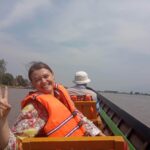
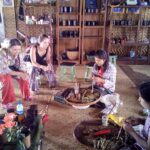
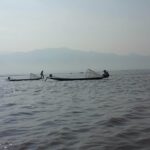
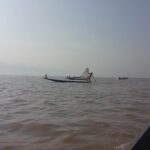
At 08.00h, the tour guide came to our guesthouse and took us to the boat, being stocked with comfortable chairs and life vests. We started our journey excited on the river to the lake, there were many boats having the same tour even though march it’s not a high season for tourism in Myanmar.
One of Inle Lake’s highlights is spotting the “one-legged” fisherman that balance at the end of their long-tail boat on one leg while using the other to manipulate the oar. I didn’t take it as a touristic attraction, seeing these fishermen made me feel like a witness of simplicity.
- New Sin Tun – Inle Traditional Silversmith Workshop. During our first stop, we could have seen how talented craftsmen are doing different silver objects from jewelry to water bowls. They are extracting the silver from silver stones brought from the north of the country and using special techniques they make an alloy of 98% silver and 2% copper. You’ll have the chance there to understand all this process and to see young people with a lot of patience making silver jewelry.
- Kayan Hand Weaving Center. The second stop allowed me to see again some Kayan women, “the long neck tribe”, weaving and presenting their customs. I felt happy to salute them in Kayan language as I’ve learned from Panpet village.
- Inle Treasure – Cotton, Silk and Lotus Hand Weaving. One of the most interesting activities that I’ve seen during this tour was about the special Lotus of Inle Lake. Here is the only place in the world where they can use the lotus plant to make fabric. The sticky, elastic lotus fibers are pulled out of the stem while simultaneously being hand-rolled to other fibers to create a long thread. They use it to make scarfs and other small items, but the work is really slow and hard. For one scarf, they have to use around 4000 lotus plants, that’s why it’s the price is around 100$.
- Cheroot Factory. I had a lot of fun during this visit because as a non-smoker, I was curious to try all the different flavored cigarettes made there. The Inle Lake area, in particular, is known for its flavored cheroots like coconut, anise, pineapple, mint and even banana wrapped in dried thatched leaves. I couldn’t stop myself buying a box with ten different flavored cigarettes for 6000 Kyat.
- Floating Gardens. I’m still amazed by the different ways of gardening that could exist. Inle Lake is also popular for its unique floating gardens that remembered me how big the ability to adapt to human beings if the plants can adapt so well to all this different environment.
- Buddhist Monastery. Our last stop was at a Buddhist Monastery, which is a school too. I was surprised to see all these kids having a meditation class. They were different ages from 7 to 14 years old but they were trying all their best to focus and connect with themselves during meditation. I also liked all the cats, Myanmar cats, sleeping in the temple like owners of the place.
It was an intense half of the day, we saw so many new things so, after the last visit, all three of us felt that it’s time to go back for having a rest. We arrived back around 13.30h, but the hour it’s depending on your group. On my way back from the lake, I smiled at the sun rays reflected on the water saying again to myself that I’m grateful for everything I’m learning from my travels. Let’s be safe and happy during our travels!
Rural Life in Myanmar
Published by Ramona Diac on June 23, 2020
Myanmar, also known as Burma, is one of the most ethnically diverse countries I’ve visited in South-East Asia. With a size of 676,578 square kilometers and a population of about 54 million inhabitants divided into more than 130 ethnic races, Myanmar is predominantly a rural country. Approximately 70% of the population lives in rural areas – 70,838 villages. I had the chance to visit some villages from Myanmar in two of its seven states: Kayah State and Shan State, which ironically are the smallest and largest states of the country.
The political context of Myanmar becoming a state, is ruthless. After a harsh monarchy ruling, Burma was governed as a British colony for more than half of a century and then was occupied by Japan during World War II. After gaining its independence in 1948, much of the country faced ethnic insurgencies, being known as the country with the world’s longest ongoing civil war. During all these disputes, Myanmar passed through a long period of extreme poverty.
Being born in the countryside, for me, it’s natural to find opportunities to explore the rural areas in the countries that I visit. That’s why I found my way into the rural life of Myanmar and the experience was spectacular. I believe that the authenticity and the real core of a nation are found in the village’s life.
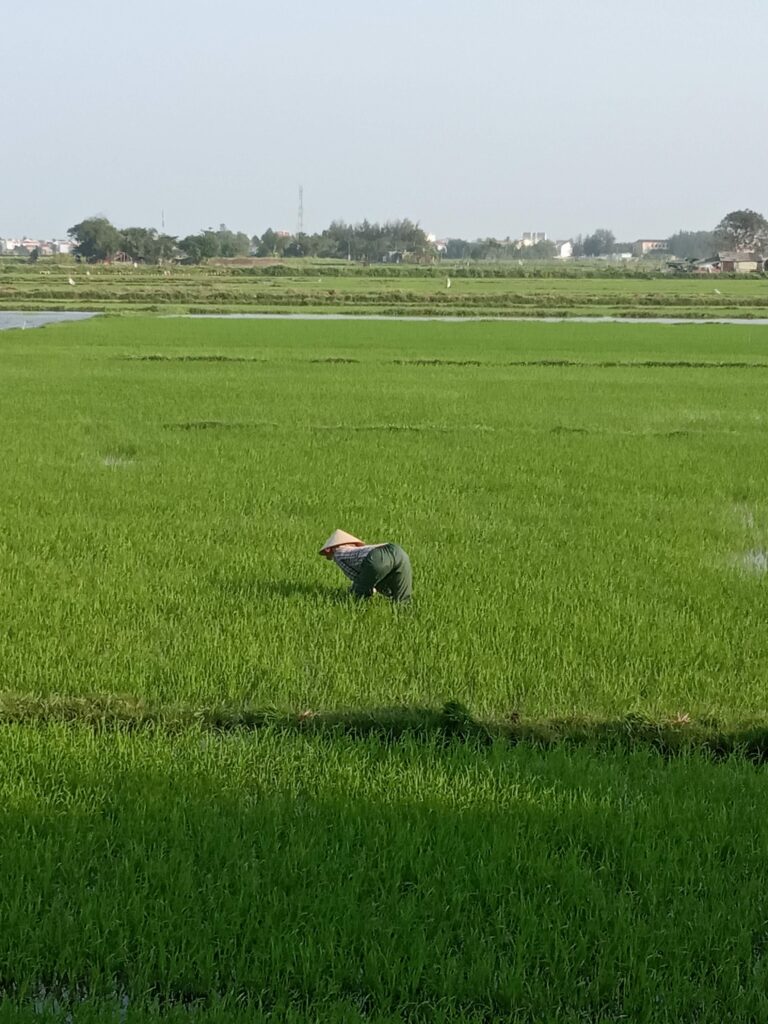
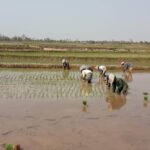
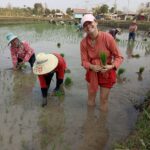
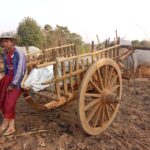
Approximately 70% of Burmese people are farmers, agriculture being the major occupation in Myanmar, followed by services – 22% and industry – 8%. With more than 200 different species, the main agricultural produce is rice which covers about 60% of the country’s total cultivated land area. I was in Myanmar in March and I was lucky to see the women planting the rice and give them a helping hand.
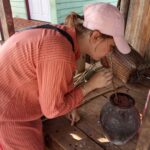
I was traveling to villages around Loikaw, in Kayah State, so after the work, they invited me to taste their special rice wine. The Kayan rice wine, or Khao Yae, is made by mixing sticky rice, millet, natural yeast, and water and steaming it before storing it in a large clay pot to fermented for around three weeks. The taste is sweet plus a little bit sour and it flows easily.
Due to different agro-climatic conditions, Myanmar has rich sources of plant biodiversity and it grows more than 60 kinds of different economically important crops. Among the major crops that remain important for local consumption and as potential exports are chilies, onion, garlic, ginger, potato, banana, mango, and melons.
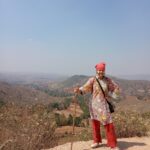
I was trekking on the famous route between Inle Lake and Kalaw with a local guide and I could have seen their plantations. Even if it was the beginning of the summer and the temperature reached 30 degrees, the locals were in the fields working their land, mostly planting ginger on this period of the year.
We spent the night in one village in the house of the former mayor and we were nicely welcomed. We received a delicious dinner including rice, eggs, and vegetables at the candle’s light. It seems that most of the villages are not connected to the national grid. Some villagers are having solar panels but the use of electricity is limited, that’s why we couldn’t charge our phones. However, nature, the beautifully clear sky, and the silence from the village made me feel at peace. I totally, recommend doing this trekking journey between Kalaw and Inle Lake.
The rural life has different timing, it seems that everything is going slow but it’s an illusion because people are working all the time and nature is following its way. I believe that this different perception of time is because people give more meaning to the things that they are doing. When you put the soul in your work and you are connected with the land and nature, the time stops and everything seems everlasting. One of my favorite Romanian poets, Lucian Blaga, has a famous quote about this: “Eternity was born in the village”. Myanmar’s rural scenery mesmerized me and for a while, I felt that I was part of the countryside’s eternal world.