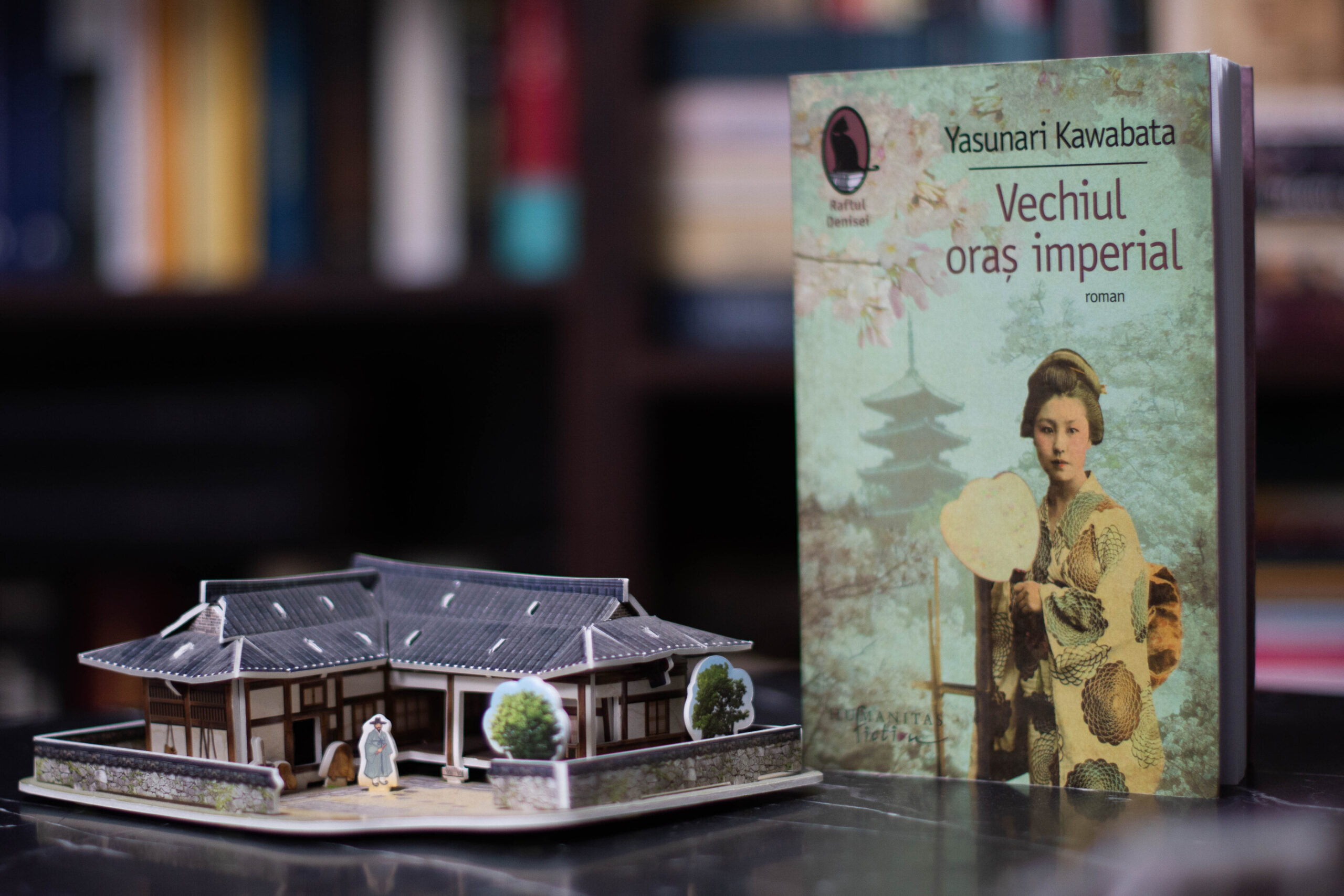
Yasunari Kawabata’s The Old Capital invites you in a journey shaped by the changing seasons, the textures of fabric, the shade of trees and the details you might otherwise walk past. Kyoto was Japan’s imperial capital for more than a thousand years, beginning in 794. That history survives in its temples, gardens, crafts and ceremonies, alongside the everyday rhythm of a city where people live and work.
Kawabata offers a way into this world through Chieko, the adopted daughter of a Kyoto kimono designer, whose discovery of a young woman who looks just like her unsettles her understanding of family and belonging. Around this intimate story, the city unfolds through seasonal changes and traditional ways of life.
For a bookish visit, let the novel shape your attention as you explore. These stops combine places connected to its world with others chosen for their gardens, streets and atmosphere.





Higashiyama: Kyoto at Walking Pace
Begin in eastern Kyoto, where the lanes around Kiyomizu-dera lead through one of the city’s most recognisable historic landscapes. Sannenzaka and Ninenzaka wind between tiled roofs and wooden façades, while the surrounding streets offer shops selling ceramics, sweets and souvenirs. The area has a long association with Kyoto’s pottery traditions.
It is easy to spend this walk searching for the perfect photograph. Try giving equal attention to smaller things: the grain of a wooden door, the shape of a tea bowl, the space between neighbouring buildings. Kawabata’s writing encourages this kind of observation, where a modest detail can carry considerable feeling.
Kiyomizu-dera brings a broader view of the city and its wooded surroundings. From here, Kyoto’s relationship with the hills becomes easier to appreciate. The mountains remain a presence even when you return to the streets below.
Gion and Yasaka Shrine: Tradition in a Living City
Continue towards Yasaka Shrine and Gion. The district developed around the shrine and remains associated with Kyoto’s geiko and maiko culture. Its streets bring together traditional teahouses, restaurants, cafés and shops.
Gion’s appeal also lies in the gradual change of atmosphere as you move between larger streets and smaller public lanes. Wooden latticework, restaurant entrances and lanterns invite a closer look.
This is a rewarding place to think about the traditions surrounding Chieko: clothing, skilled work, family businesses and the expectations carried between generations. Kyoto’s cultural inheritance depends on people continuing to practise it.
Heian Jingu: A Garden That Changes with the Year
Heian Jingu makes a striking impression with its great vermilion torii and spacious shrine grounds. Built to mark the 1,100th anniversary of Kyoto’s founding as the capital, it is also a reminder that the city has repeatedly commemorated its own past.
Behind the shrine buildings, the gardens offer a different pace. Ponds, winding paths, bridges and carefully chosen planting make the season part of the experience. Cherry trees, irises, water lilies and maples bring different colours across the year.
This is a particularly fitting stop with Kawabata in mind. Seasonal beauty gives his Kyoto much of its emotional texture. A garden makes that relationship tangible: the view you encounter belongs to a particular moment, and another visitor may find something quite different a few months later.
Nishijin: Understanding Kyoto Through Cloth
To explore another side of the city, head to Nishijin, Kyoto’s historic textile district. Here, the connection with The Old Capital becomes especially meaningful: Chieko’s family belongs to a world in which fabric, design and taste are part of daily life.
Nishijin is known for woven silk textiles, including elaborate obi, the sashes worn with kimono. The Nishijin Textile Center provides an introduction to this heritage through historical displays and textile works.
Look closely at patterns and colour combinations. They offer a way to consider the skill behind objects that can seem simply decorative at first glance. After the temples and gardens, textiles add another dimension to Kyoto: a city whose identity has also been made by hands, workshops and long practice.
Shimogamo Shrine: Trees, Shade and a Different Rhythm
Near the meeting of the Kamo and Takano rivers, Shimogamo Shrine offers a wooded approach through Tadasu no Mori. The transition from the surrounding streets to the trees is part of the pleasure of visiting.
Shimogamo and its sister shrine, Kamigamo, are associated with the Aoi Matsuri, one of Kyoto’s major traditional festivals. Even outside festival time, the setting offers space to consider the relationship between nature, ritual and the city’s long history.
Afterwards, leave time for the riverside. A bookish journey benefits from these pauses, when there is nothing specific to find and the city has room to become familiar.
Arashiyama: An Extra Half-Day Among Gardens and Hills
If you have more time, make a separate excursion west to Arashiyama and Sagano. The bamboo grove is the best-known image of the area, but Tenryu-ji and the surrounding landscape deserve attention too. This part of Kyoto has a long association with the villas and leisure pursuits of the old aristocracy.
Carry The Old Capital with you, or read it before setting out. Its gift to the traveller is a sensitivity to things that sightseeing can easily overlook: the work behind a beautiful fabric, the significance of a seasonal flower, the feeling attached to a familiar place.