Sofia is a city where centuries of history coexist in a surprisingly compact space. Roman ruins lie beneath busy streets, Orthodox cathedrals rise above the rooftops, and former royal palaces tell the story of Bulgaria’s transformation from Ottoman rule to an independent European state.
To experience the atmosphere of the Bulgarian capital in just one day, combine its historical landmarks with the simple pleasures of everyday life: walking along Vitosha Boulevard, enjoying Bulgarian food, trying a local beer and watching the city go by.
1. Sofia Regional History Museum: From Ottoman Baths to Royal Sofia
My first stop was the Sofia Regional History Museum, housed in one of the city’s most beautiful buildings: the former Central Mineral Baths.
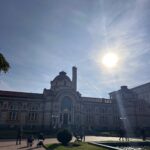
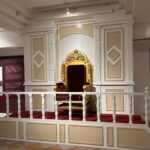
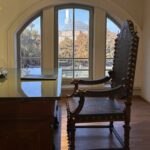
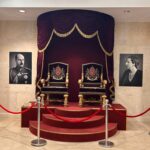
The building itself deserves as much attention as the collections inside. Completed in 1913, during the reign of Tsar Ferdinand I, it was designed by architects Petko Momchilov and Friedrich Grünanger. Its architecture combines Vienna Secession influences with Byzantine and Bulgarian medieval decorative traditions. The colourful ceramic ornaments, striped façades, arches and elegant domes reflect the ambitions of a young capital determined to establish its own European identity.
Yet the building also preserves a much older tradition. Sofia has been famous for its mineral springs since antiquity. The Romans appreciated the area’s thermal waters, and public bathing remained an important part of urban life during the Ottoman period. The Central Mineral Baths continued this tradition into the twentieth century, functioning as public baths until 1986. After extensive restoration, the building reopened as the Regional History Museum in 2015.
The museum explores the city’s transformation through its architecture, urban development, daily life and royal history, including the reigns of Ferdinand I (1887–1918) and Boris III (1918–1943). One of its highlights is the royal carriage associated with Ferdinand.
2. Ancient Serdica: Walking through Roman Sofia
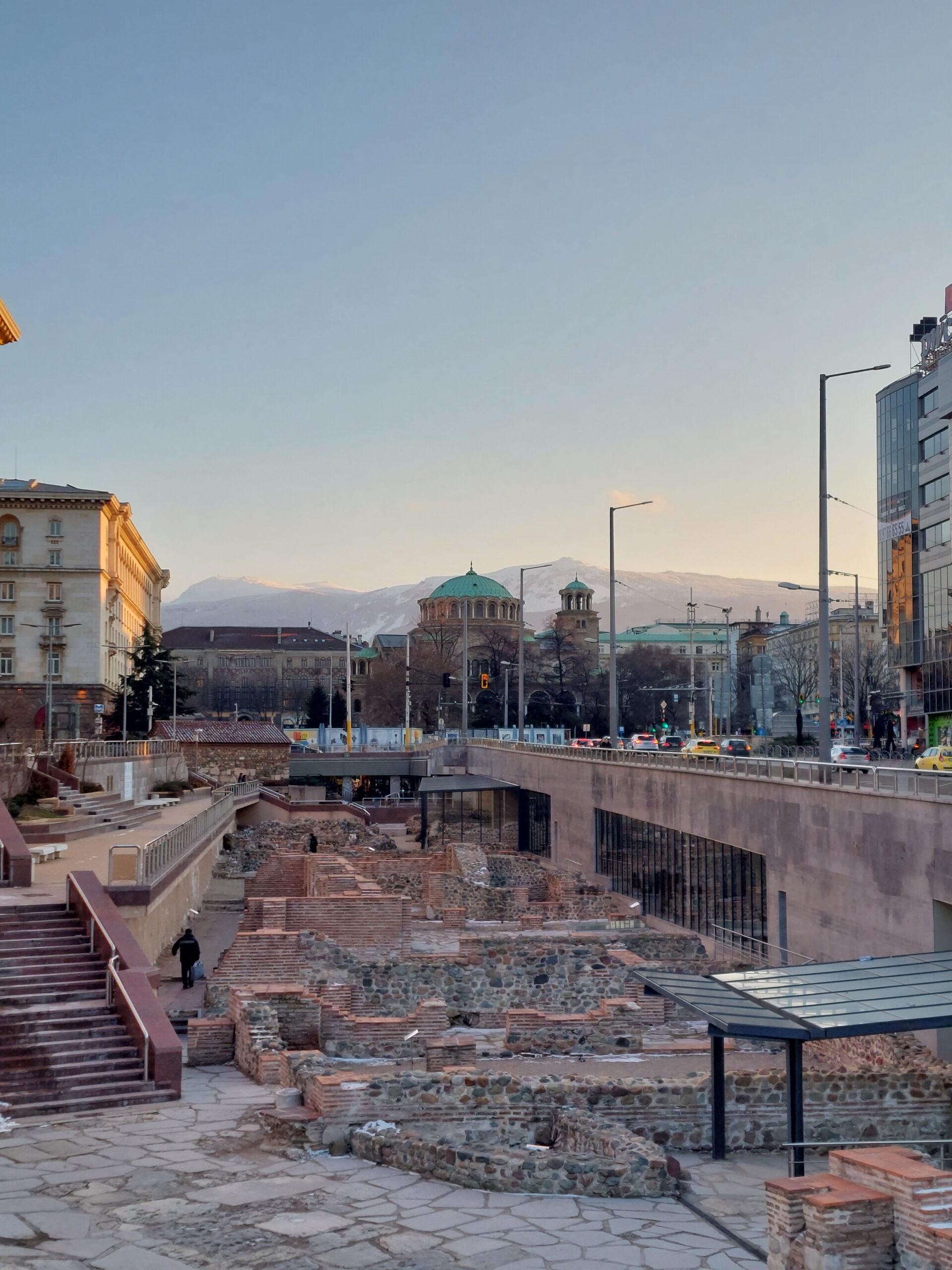
A short walk from the museum brought me to the Ancient Serdica Archaeological Complex, where the city’s Roman past survives beneath the modern streets.
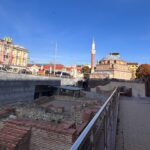
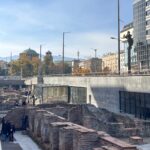
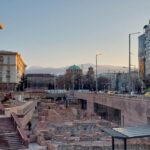
Before it became Sofia, the settlement was known as Serdica, named after the Thracian Serdi tribe. Under Roman rule, it developed into an important administrative and commercial centre, strategically positioned at the crossroads of routes connecting different parts of the Balkans.
The city flourished particularly during the reign of Emperor Constantine the Great, who spent time here in the fourth century. Sofia is often associated with the phrase Serdica is my Rome, although its attribution to Constantine is historically uncertain.
Today, visitors can walk beside the remains of ancient streets, residential buildings and shops. One of the most impressive discoveries is part of the decumanus maximus, a principal Roman road that once crossed the city.
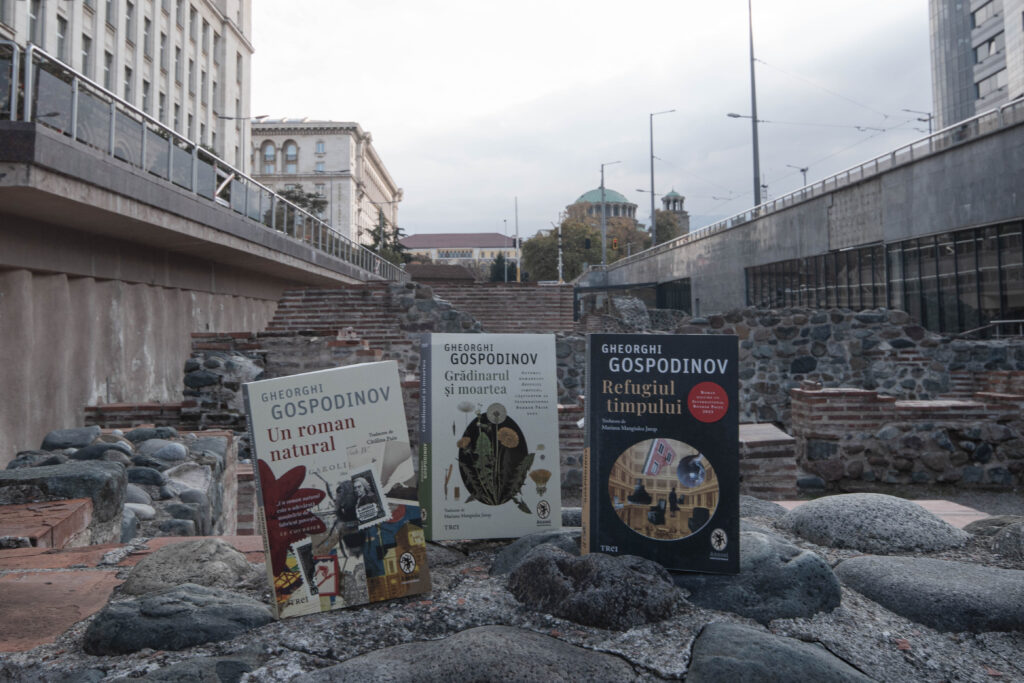
What makes the archaeological complex especially fascinating is its setting. Above the ruins rise the monumental buildings of Sofia’s socialist period, including the former Communist Party headquarters. Few places illustrate the layers of Bulgarian history so clearly: Roman Serdica, the communist capital and contemporary Sofia occupying the same urban space.
3. Alexander Nevsky Cathedral: A Monument to Bulgarian Liberation
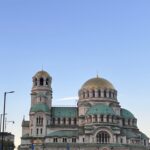
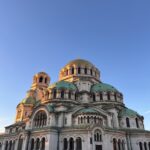
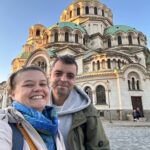
No visit to Sofia would feel complete without seeing the magnificent Alexander Nevsky Cathedral because of the golden domes, monumental proportions and Neo-Byzantine architecture, the cathedral is one of the most recognizable symbols of Bulgaria.
The construction was closely connected to the birth of the modern Bulgarian state. Following the Russo-Turkish War of 1877–1878, the newly established Bulgarian principality decided to build a cathedral commemorating the soldiers who died during the conflict.
Designed by Russian architect Alexander Pomerantsev, the cathedral was constructed mainly between 1904 and 1912 and consecrated in 1924. The cathedral is more than an architectural landmark. It represents the importance of Orthodox Christianity in Bulgarian national identity and the historical relationship between Bulgaria and Russia, a relationship that has also been complex and politically contested over time.
4. Ivan Vazov National Theatre: Sofia’s Elegant Cultural Heart
Another favourite stop was the Ivan Vazov National Theatre, one of the most elegant buildings in the city.
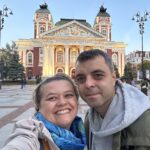
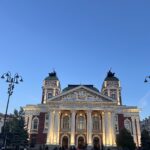
Designed by the Viennese architectural partnership Ferdinand Fellner and Hermann Helmer, the theatre opened in 1907. Its Neoclassical façade, red and white colours, columns and sculptures reflect the European architectural influences that shaped Sofia after it became Bulgaria’s capital.
The theatre bears the name of Ivan Vazov, one of the most important figures in Bulgarian literature. His novel Under the Yoke portrays Bulgarian life under Ottoman rule and the struggle for national liberation.
The building has survived fires, wartime bombing and several reconstructions, becoming a symbol of Bulgarian cultural resilience.
In front of the theatre lies the beautiful City Garden, where locals gather to chat, play chess, sit on benches or simply enjoy a quiet afternoon. This was one of those places where I felt that the best way to discover Sofia was to stop sightseeing for a moment and observe everyday life.
5. Vitosha Boulevard: Discovering Contemporary Sofia
Vitosha Boulevard, the city’s best-known pedestrian shopping street, is the perfect place to do just that.
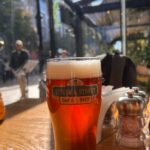
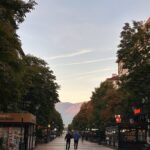
Lined with cafés, restaurants, shops and terraces, the boulevard offers a completely different perspective on the Bulgarian capital. Here, Sofia feels young, lively and relaxed. People stroll along the street, meet friends for coffee, browse the shops or settle into outdoor restaurants.
On a clear day, the Vitosha Mountains provide a beautiful backdrop, reminding visitors that nature is never very far from the Bulgarian capital.
Rather than rushing between landmarks, I enjoyed walking without a particular destination, taking in the atmosphere and discovering a city that feels both familiar and distinctly Balkan.
6. Bulgarian Food and Local Beer: A Taste of Sofia
After walking along Vitosha Boulevard, I stopped at Hadjidraganov’s Cellars, a traditional Bulgarian restaurant tucked away on Hristo Belchev Street, just a short distance from the busy pedestrian boulevard.
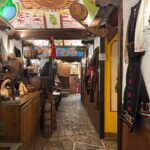
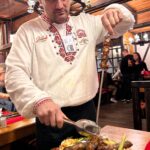
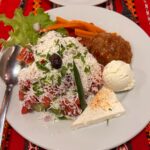
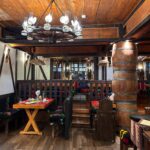
The restaurant, whose Bulgarian name is Hadjidraganovite Izbi, is designed to recreate the atmosphere of an old wine cellar. Stone walls, wooden barrels, carved decorations, traditional textiles and objects associated with Bulgarian rural life create a warm, rustic setting.
Its name comes from the legend of Hadji Dragan, a wealthy merchant who supposedly collected wines from different Bulgarian regions in his cellars. The restaurant embraces this story through its décor and its celebration of traditional food and drink.
The menu offers a wide selection of Bulgarian specialities, from grilled meats and hearty stews to fresh salads and dishes cooked in traditional ovens. It is also known for its Bulgarian wines and evening folk music performances.
For me, visiting a traditional restaurant was an important part of discovering Sofia. After spending the day exploring Roman ruins, royal history and monumental architecture, it was a chance to experience another side of Bulgarian culture: its culinary traditions and hospitality.
One day is certainly not enough to discover everything Sofia has to offer, but it is enough to begin understanding its character, a capital built upon centuries of change, resilience and reinvention.
Regional History Museum of Sofia to Hadjidraganov’s Cellars – Google Maps